Global High-Purity Alumina Market Expands Steadily, AI Server Thermal Management Emerges as a New Growth Driver
Summary: According to China Powder Network, the global high-purity alumina market is entering a steady expansion phase. Emerging applications such as AI server thermal management, lithium battery separator coatings and sapphire substrates have become the main engines of demand growth, and the window for domestic substitution is becoming clearer.
Market size: Asia-Pacific leads with sustained growth. Industry data show that the global high-purity alumina market was about USD 3.24 billion in 2025 and is expected to grow to USD 3.41 billion in 2026, reaching USD 4.97 billion by 2034, a compound annual growth rate of about 4.8%. The Asia-Pacific region dominates with a market share of about 66.98% in 2025, with China contributing particularly significantly to growth.
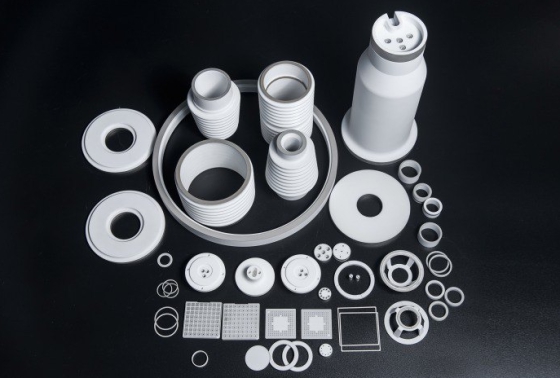
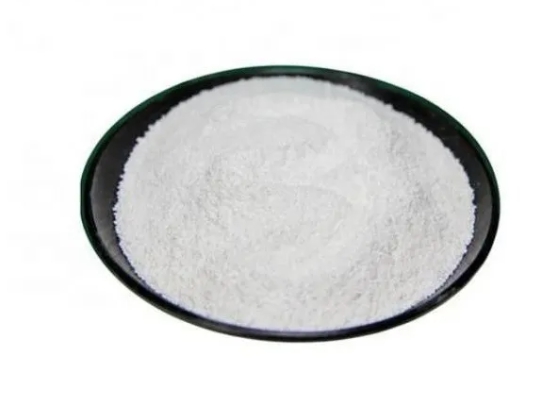
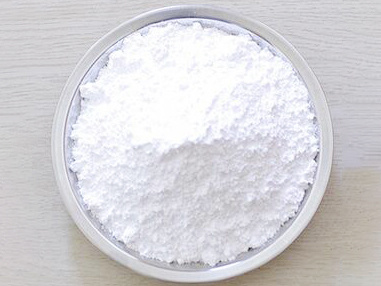
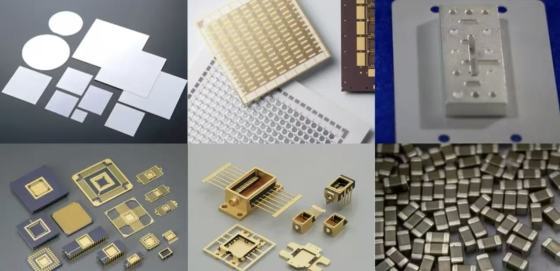
Demand structure: emerging segments are bursting forth in concentration. In contrast to the overcapacity of commodity alumina (domestic metallurgical-grade built capacity exceeded 120 million tons per year in 2026, with an operating rate of about 79%), the demand side of high-purity alumina is differentiating rapidly. Lithium battery separator coatings, sapphire substrates and electronic ceramics maintain growth, and spherical heat-dissipation fillers for AI servers have become the most-watched new breakout segment. The common feature of high-end applications is stringent requirements on powder particle size distribution, dispersibility, particle morphology and batch consistency. Beyond purity, microstructural indicators are becoming the key to material selection.
Domestic weakness: high-end supply remains scarce. In top applications such as semiconductor targets, industry standards require crystal grain size below 50 μm to ensure film uniformity and purity of 99.9995% or above. At present, domestic high-purity alumina above 99.999% still relies on imports. Control technology for trace impurities such as sodium, potassium and iron has not yet been fully overcome, and volume-production batch consistency remains the core threshold for domestic powders to enter leading supply chains.
Industry consensus: standardized evaluation is imperative. At the 3rd National High-Purity Alumina Conference held in Zibo, Shandong on September 17, Professor Pan Wei of Tsinghua University pointed out that powder performance evaluation is a key foundation for the development of the high-purity alumina industry, and the industry urgently needs unified evaluation standards and optimized product testing. This judgment is highly consistent with the procurement logic of downstream customers that being able to produce stably is the real threshold.
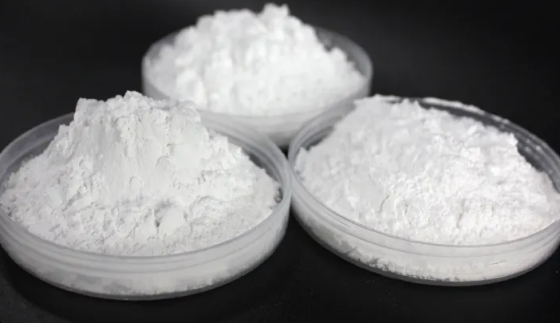
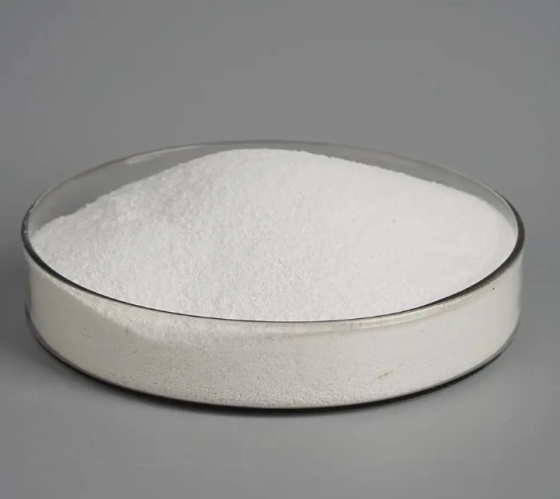
Jingci New Materials continues to follow industry developments. The company specializes in low-temperature easy-sintering precision alumina ceramic powders, covering particle sizes from 175nm to 500nm, with narrow particle size distribution, good dispersibility and consistent batch performance as its core direction, continuously providing high-stability powder solutions to customers in semiconductors, electronic ceramics, aerospace and other fields.
Data sources: China Powder Network, Alumina, Not Easy (2026-09-03) and The 3rd National High-Purity Alumina Conference Successfully Convened (2026-09-18).