MLCC Supply Gap Persists, Domestic Substitution Window Opens for High-Purity Ceramic Powders
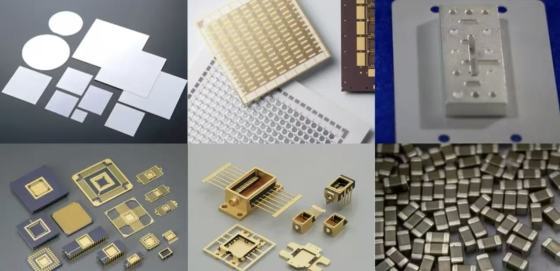
Summary: The dual pull of AI servers and new energy vehicles is pushing multilayer ceramic capacitors (MLCC) into a structural shortage cycle. As the core upstream material, the particle size distribution, dispersibility and batch consistency of high-purity ceramic powders directly determine the yield ceiling of downstream stacking processes, opening a rare substitution window for domestic materials.
Demand side: AI server usage jumps by an order of magnitude. According to industry research and public information, a single AI server uses about 8 to 13 times as many MLCCs as a conventional server: conventional servers use roughly 2,000 to 3,000 units, while a fully equipped AI server can exceed 20,000; a GB300 rack is estimated at about 440,000 units per source. Pure electric vehicles use about six times as many as combustion vehicles, averaging around 18,000 per vehicle. High-capacitance products account for nearly 80% of new AI-driven demand, and the demand structure shows a clear divergence of AI strong, consumer weak.
Supply side: high-end capacity remains dominated by Japan and Korea. In 2024 global MLCC revenue share, Murata held about 31.8%, Samsung Electro-Mechanics about 22.9% and Taiyo Yuden about 11.2%; in the high-end segment for AI servers, Japanese and Korean companies together hold roughly ninety percent. The three Chinese mainland players, CCTC, Fenghua Advanced Technology and MicroX, together account for less than 10% globally. High-end stacking and tape-casting equipment relies mainly on Japan, and capacity expansion cycles are generally 18 to 24 months, making rapid volume growth difficult in the short term.
Price side: high-end leads the increase rather than a blanket rise. In April 2026, Murata raised prices for AI and automotive products by 15% to 35%; Samsung Electro-Mechanics raised prices across the board by about 30% on August 1. Shortages concentrate on ultra-high-capacitance part numbers such as 0805 47μF and 100μF and 0603 100μF, with high-end lead times extended to 26 to 40 weeks according to sources. Industry sources suggest the boom and the gap could last into 2027 or even 2028, with the first half of 2027 possibly the peak of the supply-demand mismatch.
Domestic substitution: materials and processes advancing together. Japanese makers are vacating about 1.3 to 1.6 trillion units of low-to-mid-end general-purpose capacity, corresponding to a market space of about RMB 22 to 28 billion, forming a clear substitution window. CCTC has achieved self-supply of ceramic powders, with a dielectric layer of about 1 μm and more than 1,000 stacking layers; Fenghua has mass-produced 220μF high-capacitance products and passed NVIDIA's full-series certification; MicroX has broken through above 1,200-layer stacking processes. Upstream, Sinocera, Botian New Materials and Jiemei Technology are making progress in dielectric powders, nickel powders and release films respectively.
Requirements on upstream materials are rising in step. The evolution from 800 to more than 1,000 stacking layers means dielectric layer thickness is approaching 0.5 to 1 μm, placing higher demands on the width of ceramic powder particle size distribution, the dispersion state of individual particles and batch stability. Non-uniform primary particle size or hard agglomerates create defects in thin tape casting, directly reflected in yield losses. Domestic mainstream dielectric thickness still lags Japan and Korea by a generation, and the yield gap in ultra-high-capacitance products is expected, per sources, to take another 3 to 4 years to narrow.
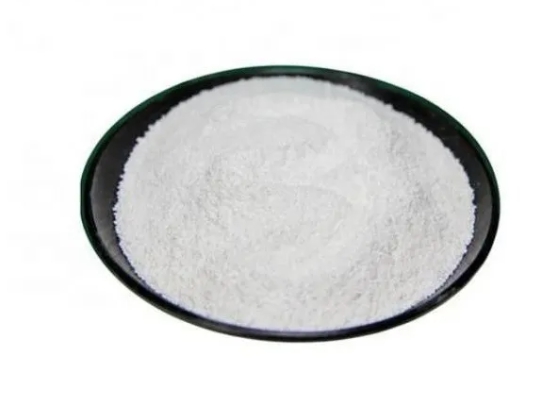
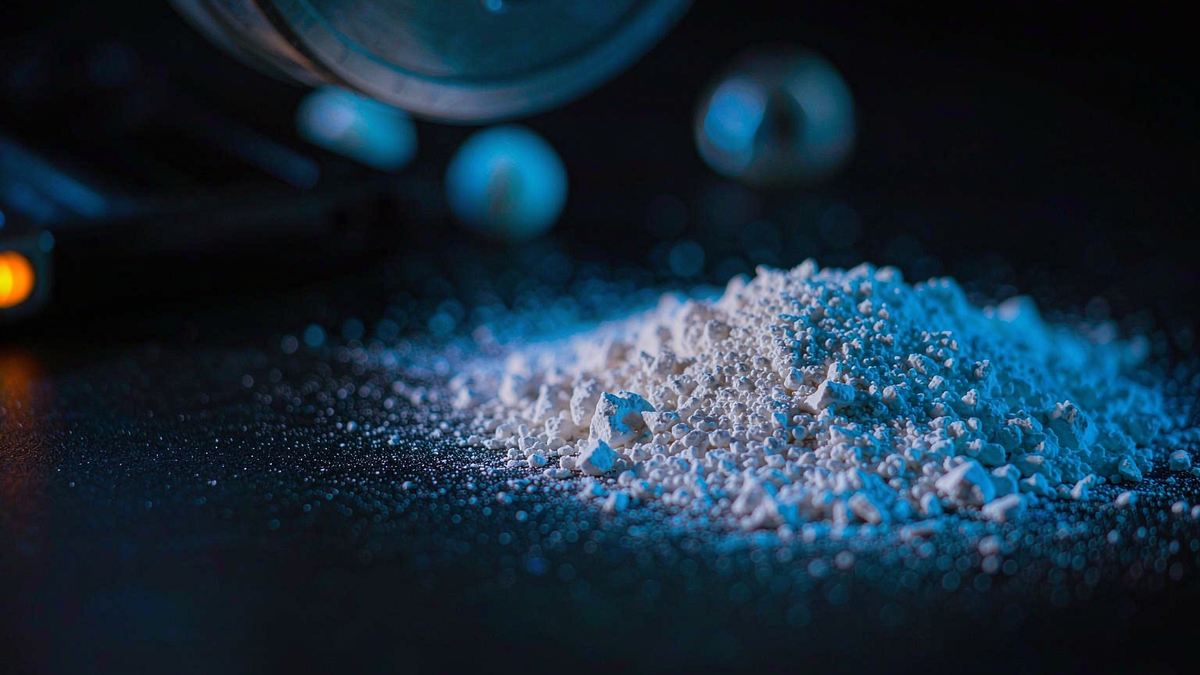
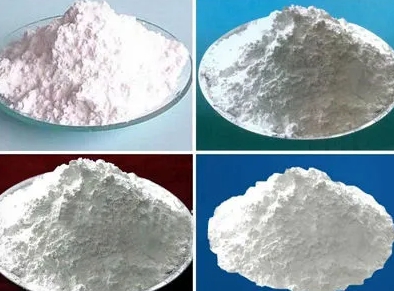
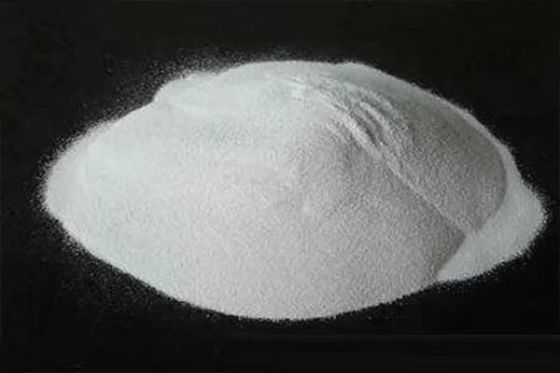
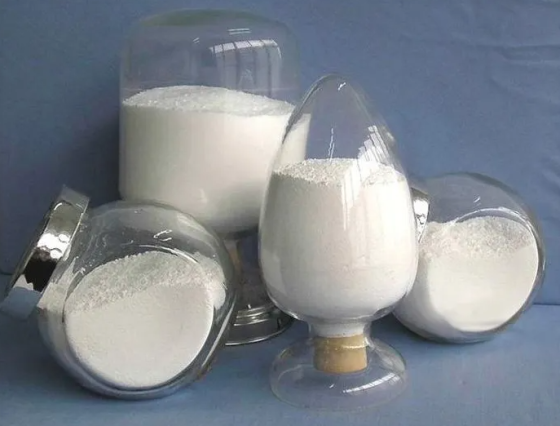
Jingci New Materials continues to focus on electronic ceramics. The company's low-temperature easy-sintering precision alumina ceramic powders cover particle sizes from 175nm to 500nm. With narrow particle size distribution, good dispersibility and consistent batch performance as the core direction, the company provides high-stability powder material solutions for high-end manufacturing fields such as electronic ceramics and semiconductors.
Data source: compiled from public industry research and information from June to September 2026. All market forecasts are institutional estimates; actual figures are subject to the original publications.